EPA outlines treatment options for perchlorate in drinking water
The U.S. Environmental Protection Agency has proposed a National Primary Drinking Water Regulation (NPDWR) for perchlorate, outlining potential new monitoring and compliance requirements for public water systems nationwide.
The U.S. Environmental Protection Agency (EPA) published guidance detailing treatment and operational strategies public water systems can use to reduce perchlorate levels in drinking water, an issue of growing interest for utilities and industrial water professionals.
Perchlorate can enter drinking water from industrial sources such as rocket propellants, explosives, and fireworks, and may also form as a byproduct in hypochlorite solutions used for disinfection. At certain concentrations, EPA warns that perchlorate “can prevent the thyroid gland from getting enough iodine, which can affect thyroid hormone production,” posing heightened risks for pregnant women and infants.
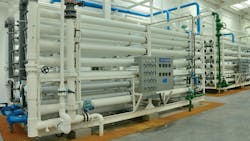
According to EPA, several treatment technologies have demonstrated effectiveness for perchlorate removal or destruction. These include anion exchange, which removes perchlorate by exchanging it with chloride ions on a synthetic resin, and biological treatment, where bacteria reduce perchlorate to chloride and oxygen, eliminating perchlorate-contaminated waste products. Reverse osmosis is also cited as an effective option, using high-pressure membranes to separate perchlorate from finished water, though concentrate disposal must be managed appropriately.
In addition to centralized treatment, EPA notes that point-of-use and point-of-entry reverse osmosis systems can be used at homes or facilities to reduce perchlorate exposure for drinking and cooking water. The agency also highlights non-treatment alternatives, such as blending contaminated sources with cleaner supplies or removing affected sources from service altogether.
Beyond treatment, EPA emphasizes that improved storage and handling of hypochlorite disinfectants can help prevent perchlorate formation, underscoring the role of operational practices alongside technology in managing this contaminant.
About the Author
 Alex Cossin
Alex Cossin
Industrial Water Editor
Alex Cossin is lead reporter, staff writer and content strategist for Waterworld Magazine, Wastewater Digest, Stormwater Solutions and Water Technology. Cossin graduated from Kent State University in 2018 with a Bachelor of Science in Journalism. Cossin can be reached at [email protected].