Supreme Court strikes down most of Trump’s tariffs in 6-3 ruling
Key Highlights
- The Court held that the International Emergency Economic Powers Act does not authorize the president to impose tariffs during peacetime.
- Chief Justice Roberts emphasized that tariff authority is a congressional power, not an executive one, marking a shift in trade law interpretation.
- The decision could lead to the invalidation of tariffs affecting over $160 billion in duties, with broad implications for industries and infrastructure projects.
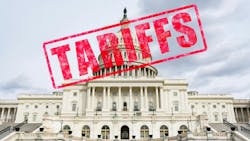
The U.S. Supreme Court has ruled 6-3 that many of President Trump’s sweeping tariffs were illegal, dealing a significant setback to his trade agenda. Justices held that the International Emergency Economic Powers Act (IEEPA) did not authorize the president to impose tariffs, a power traditionally reserved for Congress.
Chief Justice John Roberts wrote, “The Government thus concedes that the President enjoys no inherent authority to impose tariffs during peacetime.” The decision overturns the use of emergency powers to justify broad tariff authorities and could affect more than $160 billion in duties collected under the now-invalidated measures.
How industries are responding
IndustryWeek
Most manufacturers have opposed steep tariffs, saying they raise the cost of components and raw materials. However, smaller numbers of U.S.-based producers that have domestic supply chains had been cheering the actions.
The decision in the case, Learning Resources Inc. vs. Trump, means tariff rates based on IEEPA can no longer stand. The tariffs mentioned in the ruling specifically were the 25% duty on most Mexican and Canadian imports, and the 10% duty on most Chinese imports. It also refers to the “reciprocal” tariffs announced for all trading partners, which were at least 10%, and higher for many countries. The tariffs on steel, copper and aluminum were not affected by this case.
Plant Services
The ruling impacts most of the tariffs Trump has enacted since last year, but not fees on steel and aluminum imports that he enacted in his first term and former President Joe Biden continued.
For the water sector, the decision could influence the cost and availability of imported components and chemicals used in water and wastewater treatment. Tariffs can affect the price of products ranging from filtration membranes and pumps to coagulants and corrosion control chemicals, all of which are sometimes sourced internationally or contain imported inputs.
Machine Handling & Logistics
The Supreme Court’s announcement today regarding tariffs provides much-needed certainty for U.S. businesses and manufacturers, enabling global supply chains to operate without ambiguity. Clear and consistent trade policy is essential for economic growth, creating jobs and opportunities for American families. We urge the lower court to ensure a seamless process to refund the tariffs to U.S. importers. The refunds will serve as an economic boost and allow companies to reinvest in their operations, their employees and their customers.
- National Retail Federation Executive Vice President of Government Relations David French
Chemical Processing
The ruling invalidates the 25% tariffs on most Canadian and Mexican imports, the 10%–20% duties on Chinese goods tied to the drug-trafficking emergency and the "reciprocal" tariffs — a 10% baseline on all imports, with rates on China reaching approximately 145% on many goods. For chemical processors sourcing precursor materials from China, the ruling offers immediate relief on IEEPA-driven cost increases.
Stormwater Solutions
Supreme Court limits presidential tariff authority in major ruling
For stormwater and infrastructure stakeholders, the ruling may have indirect economic implications—particularly in sectors like construction and manufacturing that depend on stable global supply chains. Changes in tariff authority and trade policy can influence material costs, supply availability and the broader economic environment for infrastructure investment planning and stormwater project financing.
For the water and wastewater sector, the decision could have implications for the cost of imported materials and equipment, including pumps, treatment components, electrical systems and specialty metals that have been subject to fluctuating trade policies in recent years. Utilities and engineering firms have previously cited tariffs as contributing to higher capital project costs and supply chain uncertainty.
About the Author
 Alex Cossin
Alex Cossin
Industrial Water Editor
Alex Cossin is lead reporter, staff writer and content strategist for Waterworld Magazine, Wastewater Digest, Stormwater Solutions and Water Technology. Cossin graduated from Kent State University in 2018 with a Bachelor of Science in Journalism. Cossin can be reached at [email protected].