Asahi Kasei Launches 1-MW Alkaline Water Electrolyzer at Finnish Hydrogen Station
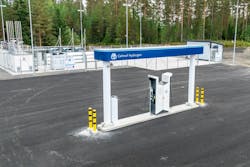
Global chemical and materials firm Asahi Kasei has started installing a 1-MW alkaline-water electrolyzer at Finland’s first commercial hydrogen refueling station in Jyväskylä.
Asahi Kasei is supplying the Aqualyzer-C3 class electrolyzer to the Central Finland Mobility Foundation (CEFMOf). With the alkaline electrolyzer separating H2 by splitting it out of water, CEFMOF hopes to expand hydrogen-powered transportation such as fuel cell vehicles and buses.
“We are delighted that the installation of the hydrogen production plant in Jyväskylä is now moving into the implementation phase,” Kenji Takeda, Executive Officer of Asahi Kasei responsible for the company’s Green Solution Project, said in a statement. “This milestone advances our decarbonization efforts and supports the development of the hydrogen ecosystem in Central Finland.”
Only a few hydrogen production facilities are currently in operation in Finland. CEFMOF is among the first operators to deploy containerized alkaline water electrolysis systems on this commercial scale, according to the release.
The electrolyzation system can produce 400 kilograms of H2 per day, enough to fill three fuel-cell vehicles. The Jyväskylä project is expected to start operations this summer.
Alkaline electrolyzers typically utilize a liquid alkaline electrolyte in a solution commonly consisting of potassium hydroxide or sodium hydroxide.
Hydrogen is a light, energy-dense and abundant gas which does not contain carbon in its molecular chain. Fuel cells use an electrochemical process to convert fuels such as H2 and natural gas into electricity and do not produce emissions at the point of use.
While hydrogen is carbon free, it is usually either produced commercially from carbon-intensive steam reforming of methane gas at industrial scale, or by electrolysis splitting the H2 from water. To be classified as green hydrogen, the electrolyzers would be powered by carbon-free energy resources such as wind, solar or nuclear power.
About the Author
Rod Walton
Energy Editor
Rod Walton is Managing Editor/Head of Content for EnergyTech.com and Microgrid Knowledge, as well as a regular contributor to Water Technology.
Walton is an 18-year veteran of covering energy and natural resource issues as a journalist. Prior to taking over EnergyTech and Microgrid Knowledge, he was business editor and energy writer for the Tulsa World, senior editor and conference chair for POWERGEN.