Flinders University discovers adsorbents for PFAS
Key Highlights
- Researchers from Flinders University discovered PFAS adsorbents for water treatment.
- Testing showed the adsorbent removes up to 98% of PFAS in model tap water.
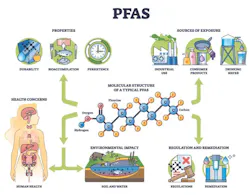
Researchers from Flinders University have discovered adsorbents that effectively capture per- and polyfluoroalkyl substances (PFAS) during water treatment.
The study, published in Angewandte Chemie International Edition, describes using nano-sized molecular cages which act as highly selective PFAS traps. The team embedded these molecular cages into mesoporous silica, an adsorbent that normally shows no PFAS binding properties. The embedded cages enable a broad range of PFAS to be removed from water, including short-chain variants which are difficult to isolate.
Laboratory testing showed the adsorbent material can remove up to 98% of PFAS at environmentally relevant concentrations in model tap water. The adsorbent also demonstrated reusability, remaining highly effective after at least five cycles of reuse.
PFAS molecules from industrial manufacturing, aviation firefighting foam and consumer products, which find their way into fresh water as well as marine environments are creating growing concerns about health risks to humans, livestock, and wildlife.