Q&A: Decentralized treatment technology transforms Fortune 50 F&B company's water management
Key Highlights
- This project exemplifies the industry shift toward decentralized, intelligent water treatment solutions that adapt quickly to changing standards and demands.
- The treatment system is modular and scalable, capable of expanding from 50,000 to 5 million GPD without major modifications. This application handles 40,000 GPD of influent.
- VVater’s technology enables onsite recycling of industrial wastewater into potable water, supporting sustainability and regulatory compliance.
- Remote operation and automation, including VVater’s upcoming Redstar AI platform, ensure continuous, reliable system performance with minimal human intervention.
- The process reduces footprint by 70% and energy consumption below 0.5 kWh/m³, eliminating the need for chemicals and sludge handling.
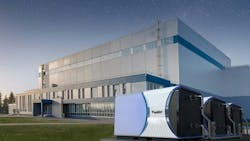
At the start of January, VVater, an industrial water treatment technology company, announced a multi-year, multi-million dollar agreement to treat and process the water at a Fortune 50 Food & Beverage company. Although the name of that company is confidential under a mutual agreement, Water Technology VP of Content Strategy Bob Crossen connected with VVater CEO Kevin Gast via email to gain insights into how this agreement came about, the technology making it work, and the future of water reuse and decentralized, on-site systems in the water business world. Read the press release.

An overview of the multi-year agreement
Bob Crossen: What were some of the drivers that drove the client’s need in this case, and how did this agreement come about?
Kevin Gast: The client operates a high-demand food and beverage production facilities where water quality, consistency, and sustainability are mission-critical. Increasing water discharge costs, tighter regulatory limits, and corporate sustainability goals drove the need for an onsite circular water solution. VVater’s technology allows the facility to recycle its process discharge directly into potable-grade water, eliminating discharge and reducing freshwater demand.
This agreement was reached following a joint engineering due diligence. The client sought a partner who could demonstrate true contaminant destruction, not just removal, and who could deliver a compact, chemical-free system with predictable performance under a long-term service model under significant time constraints. VVater was engaged based on its ability to support advanced reuse pathways and its experience integrating treatment solutions that reduce chemical dependency and operational complexity.
BC: Can you disclose the dollar figure of the agreement? Could you share the name of the F&B company?
KG: The financial terms and client identity remain confidential under a mutual non-disclosure agreement. However, it represents a multi-year, multimillion-dollar engagement.
What treatment looks like in the facility
BC: Could you explain the overall flowchart of the treatment train? How does water enter, flow through, and then discharge from the system?
KG: Wastewater at the facility originates from wet and dry food production, CIP activities, and washdowns. These streams are collected through multiple on-site manholes and routed through mechanical pretreatment, including screening and primary solids separation, before entering a series of non-aerated lagoons that provide biological stabilization and settling.
The treatment begins at the final lagoon, where it provides initial settling. From there, the VVater process begins:
- Farady Reactor (with internal AOP/ARP chambers) uses an alternating current, advanced low tension electroporation process (ALTEP), this is the heart of the system.
- Advanced Dissolved Air Flotation (ADAF) generates micro- and nanobubbles that flocculate and precipitate solids, fats, and oils. The ADAF system is also fitted with pre-ARP Swing Reactor to accelerate the reduction processes.
- Polishing and Reaction Tanks allow final clarification through cyclonic and cation exchange mechanisms.
- DOPP13 –isa proprietary secondary safety disinfection step ensuring total disinfection and removal of any trace organics.
- Storage tanks are used for ballast and back washing.
- Optional Reverse Osmosis (RO) is included only when desalination, sodium, and chloride removal is required, as VVater’s technology does not desalinate.
This flow transforms lagoon effluent into potable-grade water, suitable for reuse in plant operations and provides drinking water, effectively creating a closed loop system.
BC: Will VVater be treating the water as a continuous flow, or is the system configured in batches to achieve the 40,000 GPD conversion rate? Will that flow rate be scalable or is it fixed?
KG: It’s a continuous-flow process, currently treating 40,000 gallons per day of influent and producing 40,000 gallons of potable-grade output per day, with expected wastage at 0.2%. The system is modular and fully scalable, additional Farady and ADAF modules can be added in parallel to expand capacity up to municipal or industrial scale (from 50,000 to 5 million GPD) without extensive process modifications.
Water reuse now and in the future
BC: The press release notes that VVater will convert the facility’s contaminated discharge into safe, potable drinking water. How will that potable water be used or repurposed?
KG: The treated water will be reused onsite for non-product applications such as wash water, cooling towers, and boiler feed. This drastically reduces the facility’s reliance on municipal water while lowering its discharge volume and environmental footprint. This enables a closed-loop reuse cycle, reducing both freshwater intake and wastewater discharge while improving the facility’s sustainability metrics. With the objective of eventually being utilized as drinking water and reused for manufacturing feedstock water.
BC: Does the agreement require that the treated water remain onsite, or is there potential for directing potable water to external uses in the future?
KG: This is for sole use of the customer, with no anticipated off-sell mandates for external users at this time.
Operations and maintenance over the long term
BC: Given the 10-year engagement, how will VVater operate and maintain the system day to day after commissioning? Are there additional job opportunities for professionals?
KG: VVater operates all systems remotely from its Command Center in Austin, Texas, which continuously monitors the entire installation. Every sensor, valve, circuit breaker, and even lighting elements within its systems are integrated into VVater’s digital control layer. Through advanced automation and data telemetry, the system operates autonomously and can be controlled, diagnosed, or adjusted remotely.
VVater’s upcoming Redstar AI platform will add predictive analytics, allowing the system to self-optimize and self-correct for flow, load, and power efficiency, ensuring round-the-clock reliability with minimal human intervention. VVater’s objective is to create an operator-friendly solution, that not only is intuitive but also reliable. Through our advanced automation systems and neural networks, VVater believes that one day we will achieve an Autonomous System Operator or ASO.
That said, VVater is one of the fastest-growing water technology companies in the United States, currently expanding its engineering, manufacturing, and operations teams to meet demand and currently various job opportunities!
BC: How do the smaller footprint and energy savings/reductions manifest specifically for this plant? Any figures you can share?
Operating Details
- Capacity: 1,667 gallons/hour (40,000 gallons/day)
- Power: 460V, 3-phase, 60Hz, 100A
- Short-circuit current rating (SCCR): 65 kA
- Dimensions: 40 ft (L) × 8 ft (W) × 9.6 ft (H)
- Weight: 12,700 kg (≈ 28,000 lb)
- Operating Pressure: 8 PSI (0.6 bar) to 58 PSI (4 bar)
- Operating Temperature: 35°F (2°C) to 112°F (45°C)
KG: VVater’s approach replaces multiple conventional treatment stages (coagulation, oxidation, filtration, and disinfection) with a single integrated AC-driven process. The result is a 70% smaller footprint and an energy use below 0.5 kWh/m³ (≈0.0019 kWh/gal). No chemical storage, dosing, or sludge handling is required, which further reduces the environmental and operational burden.
(Editor's Note: See sidebar for further operating details.)
Why decentralized, on-site systems are gaining traction
BC: How does this installation reflect the broader industry shift toward decentralized, onsite treatment systems referenced in the announcement?
KG: Around the world, we’re seeing a fundamental shift from large, centralized treatment plants toward modular, intelligent, and decentralized reuse systems that operate directly at the source of generation.
The pressures driving these changes are clear: tightening water regulations, rising energy costs, heightened scrutiny of PFAS, and global water scarcity. Traditional infrastructure is too slow, too costly, and too rigid to keep up with the pace. Modern industries require solutions that can be deployed rapidly, integrate seamlessly, and continuously adapt to changing inflows and discharge standards.
VVater’s technology sits squarely at the center of this transformation. Our Farady Reactors, powered by the Advanced Low Tension Electroporation Process (ALTEP), combine advanced oxidation and reduction in a single, modular platform, delivering potable-grade water without the need for chemicals, membranes, or biological dependency. By integrating this with ADAF flotation and real-time automation, we deliver a system that not only purifies water but can also self-monitor, self-correct, and self-optimize through our Redstar AI system in the long term.
About the Author
 Bob Crossen
Bob Crossen
VP of Content Strategy, Energy & Utilities, EndeavorB2B
Bob Crossen is the vice president of content strategy for the Water and Energy Groups of Endeavor Business Media, a division of EndeavorB2B. EB2B publishes WaterWorld, Wastewater Digest and Stormwater Solutions in its water portfolio and publishes Oil & Gas Journal, Offshore Magazine, T&D World, EnergyTech and Microgrid Knowledge in its energy portfolio. Crossen graduated from Illinois State University in Dec. 2011 with a Bachelor of Arts in German and a Bachelor of Arts in Journalism. He worked for Campbell Publications, a weekly newspaper company in rural Illinois outside St. Louis for four years as a reporter and regional editor.