Cheyenne Suspends Industrial Wastewater Discharge Amid Bacterium Discovery at Meta Data Facility
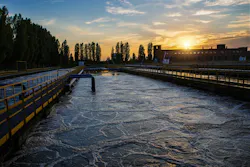
Municipal officials in Cheyenne, Wyoming put a stop to accepting industrial wastewater discharge from a system which handles digital giant Meta Platform’s data center campus under construction in the city.
The Cheyenne Board of Public Utilities (CBPU) ceased reception from data center fill-and-flush and closed-loop cooling operations due to a bacterium discovered in the reclaimed water. The city reportedly traced that bacterium to Goat Systems LLC, which Meta Platforms contracts to build its Cheyenne campus.
In a separate announcement which did not name Meta specifically, the Cheyenne BPU reported its laboratory staff found a rare bacterium during routine wastewater sampling. The organism was identified as cupriavidus gilardii, which is found in soil and groundwater environments.
“Cupriavidus gilardii is known for its high resistance to metals and has been associated with certain industrial applications involving metal reduction processes, including some advanced manufacturing and industrial systems,” read the CBPU statement released June 26. “Research also indicates that, while infections are extremely rare, the bacterium may pose health risks to immunocompromised individuals and the elderly through direct exposure.”
The city’s reuse water system was taken offline as a precaution, according to the CBPU report. Liquid and air cooling are becoming an increasing priority and challenge for the data center industry as AI and supercomputing raise the capacity and heat activity of servers in the facilities.
“Through extensive field investigations and targeted sampling, BOPU staff ultimately traced the source to an industrial user within the system. The industrial user's discharge privileges were immediately and permanently terminated,” the city utility pointed out.
Fill and flush are a process in which crews fill a cooling loop’s piping with water, flush it to clear debris and then send the water to drain, according to coverage on the Tom’s Hardware PC enthusiast website. Goat Systems routed flush water containing cupriavidus gilardii into the Cheyenne city sanitary sewer system, according to the report. Cupriavidus gilardii may be resistant to multiple antibiotics and could prove fatal to humans in rare circumstances, according to research.
Meta, parent of Facebook and Instagram, announced plans for its Cheyenne data center in 2024. The 715,000-square-foot campus was Meta’s 25th globally and is expected to close nearly $1 billion by the time it opens in 2027, according to reports.
One of Meta’s announced goals was to restore more water back to local watersheds than it consumed. The digital infrastructure giant was partnering with Laramie County Conservation District to help restore Crow Creek and recharge the Ogallala Aquifer underground reservoir.
About the Author
Rod Walton
Energy Editor
Rod Walton is Managing Editor/Head of Content for EnergyTech.com and Microgrid Knowledge, as well as a regular contributor to Water Technology.
Walton is an 18-year veteran of covering energy and natural resource issues as a journalist. Prior to taking over EnergyTech and Microgrid Knowledge, he was business editor and energy writer for the Tulsa World, senior editor and conference chair for POWERGEN.