South Dakota Mines Professors Using Wastewater, Chemicals to Extract Rare Earth Minerals from Coal Sites
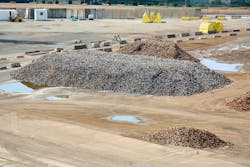
Two professors from the South Dakota School of Mines and Technology are working to extract rare earth elements (REEs) from wastewater in old coal mines in the region.
Venkataramana Gadhamshetty, Ph.D., professor of civil and environmental engineering, and Purushotham Tukkaraja, Ph.D., professor of mining engineering and management, say they are developing a sustainable method to extract REEs from discarded coal mine waste. The pair will present their research to a group of government and university researchers on Wednesday.
Utilizing water technology is part of the pair’s three-step process in attempting to extract rare earth elements which are critical to the future of digital infrastructure and electrification in the U.S.
“These rare earth elements are essential for technologies such as electric vehicles, wind turbines, smartphones, LED lighting, fiber-optic internet, medical imaging and national defense systems,” Gadhamshetty said in a statement. “Among those elements, dysprosium, ytterbium and erbium are considered high-value REEs because they are in strong demand and difficult to replace, while yttrium and gadolinium are widely used, high-volume REEs in electronics, lighting and healthcare.”
The process begins with breaking down large rock fragments to increase access to the embedded elements. Environmentally friendly chemicals are then used to convert the REEs from solid to liquid form, enabling selective extraction of the elements. In the final stage, microorganisms absorb dissolved elements, effectively concentrating them inside living cells.
“Once the transfer is being done, you are able to capture all those precious materials into the microbial cells – using living beings to consolidate the dilute levels of these rare earth elements from larger bodies,” Gadhamshetty said.
He compared the biological step to human nutrition. Just as people need vitamins, microorganisms require some of these elements in trace quantities.
“We understand those needs and can optimize conditions, so the microbes naturally take up the rare earth elements, creating a mutually beneficial relationship,” Gadhamshetty said.
The global supply chain for many commercial-scale rare earth elements are in China, Brazil, Russia, Vietnam and, to a lesser developed extent, the U.S.
The issue is so critical that earlier this month the U.S. Department of State held a key meeting with delegations from more than 50 nations and the European Commission.
“Critical minerals and rare earths are essential for our most advanced technologies and will only become more important as AI, robotics, batteries, and autonomous devices transform our economies,” reads the lead page on the State Department’s Critical Minerals Ministerial.
“Today, this market is highly concentrated, leaving it a tool of political coercion and supply chain disruption, putting our core interests at risk. We will build new sources of supply, foster secure and reliable transport and logistics networks, and transform the global market into one that is secure, diversified, and resilient, end-to-end.”