Confidence — not technology — is limiting industrial reuse of municipal wastewater
Water scarcity is now a year-round problem across the world. Recurring droughts, ever-rising global temperatures and fierce competition with municipal and agricultural industrial users, has placed limitations on freshwater abstraction for industrial purposes, with permits increasingly difficult to justify and acquire.
This poses a structural constraint for industrial growth in water-stressed regions. Ultimately, restrictive water permits limit production capacity and stifle flexibility, curbing appetites for capital investment.
Rather than look to freshwater sources, regulators and other regional planners now expect industrial operators to instead make use of reclaimed municipal wastewater where technically feasible.
This is the problem. Municipal water reuse isn’t a technical challenge. It’s a matter of confidence.
Rather than the lack of suitable technology, it is the persistent concern around the low alkalinity and perceived microbiological risk of RO permeate that deters decision-makers from pursuing municipal reuse.
While these fears might have fair grounding, the evidence base has matured. With full-scale operational data demonstrating that risks can be suitably mitigated, it is time to embrace this plentiful source of industrial feedwater.
High risk perceptions despite significant pilot data
Municipal wastewater RO permeate is viewed as inherently high risk. Even a well-operated two-pass municipal reclamation plant equipped with advanced high-quality membranes will supply feedwater with a radically different composition than what would come from a surface water source.
Very low hardness, very low alkalinity, limited buffering capacity and differing nutrient profiles create a recipe for corrosion and microbiological growth. Careful monitoring and bespoke chemical treatment programs are necessary mitigation.
Pilot-scale and time-limited demonstrations have shown that tertiary or advanced-treated effluents can be used as cooling tower make-up in power, refining and petrochemical applications.
The chemistry and necessary technology pathways are well understood. There is a significant body of work, accumulated over many years, that says “we can do this”.
But it is not enough.
While scientifically robust, these studies fail to capture operational reality. They simply cannot reflect the transient conditions and unexpected challenges that consume the lives of people tasked with managing uptime, asset integrity and personnel safety.
A tightly controlled short-term pilot with isolated water chemistry and controlled hydraulic conditions is never going to demonstrate how a solution can stand up to seasonal variation in feed water composition, nor evaluate whether it introduces long-term corrosion risks.
This broad evidence base de-risks the chemistry. It does not de-risk the decision to invest millions in a mission-critical treatment plant.
Changing the confidence equation
Full-scale, multi-year operating data from comparable industrial sites is what operators need to confidently commission emerging technologies or adopt new approaches.
This is now available for municipal reuse.
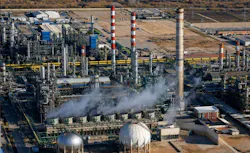
The operational record of a petrochemical cooling tower in Tarragona, Spain tells the nuanced story that operators need to hear. Buffering management, inhibitor selection and online monitoring have allowed for successful multi-year operation without incident.
Mitigation tuned to the make-up chemistry has ensured that corrosion and microbiological growth is contained within accepted industry operating parameters.
The result is a significant reduction in make-up water demand and blowdown.
CASE STUDY: Camp de Tarragona Advanced Water Reclamation Plant
The Camp de Tarragona Advanced Water Reclamation Plant, operated by Aigües Industrials de Tarragona (AITASA), reclaims secondary municipal effluent from Tarragona and Vilaseca-Salou using physical-chemical pretreatment, micro-sand-based clarification, and two-pass RO. Its current capacity is approximately 19,000 m3/d.
The incoming municipal RO permeate has conductivity of 19 µS/cm, calcium carbonate below 0.1 mg/L with negligible sulfate presence. Meanwhile, the surface water abstracted from the adjacent Ebro river has conductivity of 950 µS/cm and 260 mg/L of calcium carbonate.
Undeniably different compositions at any time of the year, making straight substitution a challenge.
Instead, progressive blending is used in the make-up header, with reclaimed water introduced across three controlled ramps; 15%, 25% and then 40%. The resulting 160 m3/h feed is used as make-up water for an ethylene cracker cooling tower.
Over a multi-year evaluation, the solution delivered significant water savings. Total make-up water demand fell by approximately 22% (110 m3/h) compared to the 4-cycle baseline under comparable thermal load. Meanwhile, cooling tower blowdown fell by approximately 50 percent, or about 76 m3/h.
Cycles of concentration were increased from an initial baseline of four, even achieving seven cycles throughout the summer months. Above seven cycles the binding constraint at Tarragona is hydraulic, not chemical.
Corrosion and microbiological control were maintained throughout operation. The staged approach allows for a high-level of control and effective risk mitigation. Each ramping step is held long enough to allow for a calibrated treatment response based on real-time monitoring and control logic.
This adaptive treatment is enabled by an online platform measuring key metrics including conductivity, pH and temperature, alongside corrosion-rate estimates from online linear polarization resistance (LPR) probes. While most adjustments to chemical feeds are done automatically, consistent with control logic, certain conditions are configured to trigger alarms and prompt operator intervention.
Corrosion performance targets were set at less than 1 mpy for carbon steel and less than 0.1 mpy for copper alloys. The inhibitor program is configured to account for reduced buffering capacity, and anti-scalant dosing is adjusted to reflect the lower scaling potential of the blended make-up.
Carbon steel corrosion rates averaged 0.30 mpy, with a standard deviation of 0.15 mpy and a maximum of 0.77 mpy, consistently below the 1 mpy target. Meanwhile copper-nickel alloy corrosion rates averaged 0.02 mpy, again below target levels.
Monitoring also revealed that aerobic bacteria counts remained within site specifications (<10,000 CFU/ml) and samples tested by external laboratories did not detect Legionella pneumophila.
A further benefit emerged around chloride concentration, with levels dropping from approximately 1,040 mg/L to 21 mg/L when the system was operating at maximum efficiency with RO-based operation at seven cycles compared to river water at four. This reduction complemented the chemical inhibitors, reducing the potential for localized corrosion typically encountered with high levels of chlorides in low-alkaline conditions.
Tarragona is not an experimental new treatment pathway. Its value is that it proves established chemistry performs as anticipated under real industrial conditions, sustained over years rather than weeks.
This was a working site exposed to real seasonal variability and the routine transients of an ethylene cracker. It shows that the potential risks of municipal RO permeate can be mitigated at full industrial scale to deliver multi-year water savings.
Moving the conversation forward

Operators now face a new question. They no longer need to ponder whether RO-treated municipal wastewater can be used for cooling tower water make-up.
The technical answer has been known for years and now Tarragona demonstrates it is a reasonable proposition at industrial scale.
The new question is whether their site can implement the monitoring and discipline necessary to adapt their treatment regime to facilitate this transition and demonstrate the agility to manage the full range of seasonal and process conditions.
If sites can meet those conditions, the benefits of transition to municipal RO reuse are significant. Meaningful reductions in freshwater abstraction that not just appease regulators but deliver improved resilience against drought-driven supply constraints – there will always be wastewater to be reclaimed.
Now, if an operator is not ready, the priority is not another pilot study to check the chemistry. It is an investment in the monitoring and control frameworks and instilling operating discipline. That is the missing factor in the confidence equation.
Confidence is built through controlled implementation and operational data, not through water-quality specifications alone. The Tarragona record suggests that the industry now needs to move the conversation forward. Industry needs to be talking about how it does this, rather than whether it should.
About the Author
Guillem Gilabert-Oriol
R&D Technical Leader, DuPont Water Solutions
Guillem Gilabert-Oriol, PhD, is R&D Technical Leader, DuPont Water Solutions. Based at DuPont's Global Water Technology Center in Tarragona, Spain, Guillem is also a member of the Board of the European Desalination Society and an Adjunct Professor at Universitat Rovira i Virgili. His research is primarily focused on membrane innovation, industrial water reuse, and desalination.