Achieving better wastewater treatment results through segmentation
Key Highlights
- Traditional consolidation and dilution strategies pose operational risks due to chemical interactions and complex wastewater treatment challenges.
- Segmentation allows for targeted treatment of specific contaminants, improving efficiency and enabling the adoption of emerging water treatment technologies.
- Transitioning to segmentation requires careful planning, including waste stream identification, facility footprint assessment, and technology selection.
- Segmentation enhances regulatory compliance by providing clear, source-specific treatment data, reducing ambiguity and legal risks.
- Embracing segmentation and concentration strategies positions facilities for long-term sustainability, water reuse, and resilience against evolving regulations.
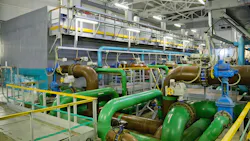
For years, industrial operators have achieved wastewater compliance by consolidating multiple waste streams into a single, complex stream that dilutes contaminants amid other unrelated contaminants. While dilution through consolidation has been the default strategy for managing complex industrial waste streams, increasing regulatory pressure is forcing many operators to consider new strategies for meeting discharge limits.
As consolidation and dilution strategies change, some facilities are beginning to shift course in favor of segmenting waste streams into concentrated contaminants for treatment by specialized systems before discharge.
Operationally, this change offers real advantages. Segmentation and concentration allows facilities to adopt tailored solutions to unique contaminants like PFAS, metals and more, and meet discharge limits without needing to downscale operations or overhaul water chemistries.
Segmentation and concentration also reduces regulatory exposure. Consolidation-based dilution occupies a legal gray area: Federal pretreatment regulations have long prohibited using dilution as a substitute for treatment, and blended waste streams can inadvertently cross that line even when consolidation was originally implemented for legitimate operational reasons. As monitoring technology improves and local limits tighten, facilities relying on consolidated discharge face growing scrutiny over where exactly that line falls. A segmentation and concentration model helps facilities avoid this ambiguity. Because each contaminant is treated at the source rather than blended and averaged, operators can demonstrate compliance more directly, with less reliance on interpretation or after-the-fact justification.
Making the shift is not simple however. Moving from a consolidation and dilution setup to a segmentation and concentration approach is a major pivot in plant operations because most dilution facilities were designed for waste stream consolidation. Fortunately, developments in water treatment technologies are making that pivot more achievable than ever, giving facilities real options and incentives for making the switch.
The operational risks tied to waste steam consolidation and dilution
For years, mixing together waste streams as a way to dilute regulated substances in wastewater has been a go-to strategy for large scale manufacturers or facilities developing multiple products with differing waste streams. While facilities with high levels of a single controlled waste contaminant could not adopt a consolidation approach, other facilities have embraced the simplicity, convenience and affordability of a dilution and consolidation strategy. However, operational challenges related to mixing multiple waste streams have emerged.
Combining streams can trigger unexpected chemical interactions between contaminants, leading to the formation of unexpected byproducts and a more complex wastewater that may bring a facility out of discharge compliance. For example, some processes in metal finishing and semiconductor manufacturing may produce a waste stream containing cyanide-based process contaminants. When this wastewater is mixed with an acidic stream from a separate rinse process, it can generate hydrogen cyanide gas. This gas represents a serious safety hazard that would not occur if the streams were kept separate. While not every unintended interaction will lead to a safety hazard, the potential for unknown interactions presents a significant risk to a facility.
Beyond unanticipated chemical interactions, complex waste streams like those that result from consolidation, are notoriously difficult to treat - even with modern water treatment technologies. This creates two challenges. First, a facility with this complex wastewater will have difficulty keeping up with advances in water treatment technologies, as many modern technologies are most effective when treating concentrated waste streams. Second, even consolidated wastewater that meets discharge limits can have a “bad” stream. If an upstream process fails, or if an unforeseen chemical interaction leads to a runaway reaction, consolidated wastewater can quickly become noncompliant. Due to the complexity of the consolidated wastewater, emergency measures like the introduction of powdered activated carbon may prove ineffective at correcting the problem.
How cam segmentation improve treatment efficiency
The benefits that a segmentation and concentration model has for improving the efficiency of water treatment systems cannot be underestimated, even granting that it may be more energy intensive than consolidation. Segmenting and concentrating waste streams provides facilities with new risk mitigation options, opportunities for adopting new and emerging water treatment technologies and the potential to reuse more process water, which decreases overall facility water demands.
Many wastewater contaminants have unique treatment needs that differ - or sometimes completely counteract - the treatment process for another contaminant. By segmenting, operators can focus each treatment process on a single contaminant, tweaking and tailoring each segmented process to maximize treatment efficiency. While this approach can increase the amount of equipment involved in the overall treatment process, operators will get much more out of each system and may even reduce maintenance requirements by ensuring each process is operating within its optimal environment.
From a risk perspective, segmenting waste streams provides facility operators with greater control of their wastewater and overall treatment process. Should a single process fail or underperform, operators can adjust or shut down a single process without completely halting wastewater treatment. This also provides operators with more options for keeping up with regulatory changes, as stricter requirements for a single contaminant would only require adjusting a single segmented treatment process, instead of the entire treatment system.
Finally, segmentation creates new opportunities for adopting and implementing the latest in water treatment technologies, even new water reuse or zero liquid discharge strategies. Segmented waste streams usually rely on a technology like electro-ceramic desalination (ECD) membranes to extract specific contaminants from a main waste stream into a concentrated side stream. This side stream can then receive dedicated treatment, while the main waste stream, now free of target contaminants, is potentially ready for use in a water reuse system. Overall, segmentation creates opportunities for operators who want to get the most out of their facility’s water.
Considerations before switching to a segmented wastewater model
Switching from a consolidation and dilution strategy to a segmentation and concentration approach is not simple for facilities that were designed for consolidation. For operators considering this new approach, there are a few important considerations.
First, operators will need to identify the specific waste streams that will be extracted from the main one. A good rule of thumb is that like-contaminants, such as similar metals or alcohols, can be grouped into the same waste stream segment, reducing the number of segments that a facility needs to manage. Identifying each potential segment in a complex consolidated waste stream can be a complex process, and operators may wish to partner with an expert in wastewater chemistries to determine their optimal segmentation strategy.
Second, operators will need to examine their facility footprint to determine how many segments a facility can support as well as the space requirements for any new systems or processes to treat those streams. Operators will also need to develop a transition plan, starting with identifying which contaminants present the greatest risk to a facility. Those should be separated into a segmented waste stream first.
Finally, operators will need to decide which treatment technologies will provide the best outcomes for their facility. Fortunately, many new water treatment technologies are designed around a facility’s limited existing footprint and can be tailored to meet unique space requirements, connect with existing infrastructure, or both.
Segmentation and concentration: The emerging standard for facilities serious about long-term sustainability and compliance
The evolution from consolidation and dilution to segmentation and concentration is a fundamental rethinking of how industrial facilities approach wastewater management. The risks of mixed waste streams, from dangerous chemical interactions to treatment inefficiencies, make a compelling case for change, but the transition is neither quick nor simple. Facilities considering this shift must carefully map their contaminant profiles, assess their physical and operational constraints and select treatment technologies suited to their specific needs.
For operators willing to make this investment, the payoff extends well beyond regulatory compliance: greater operational control, resilience against process failures and the ability to adopt emerging technologies like electro-ceramic desalination membranes. As regulatory pressure continues to mount and water treatment innovation accelerates, segmentation and concentration are likely to become not just an alternative strategy, but the new standard for facilities serious about long-term sustainability and compliance.
About the Author
Greg Newbloom
CEO, Membrion
Greg Newbloom is the founder and CEO of Membrion. He leads the development of advanced membrane technologies that address some of the most complex industrial wastewater, desalination, and separation challenges. An engineer and entrepreneur, he founded the company after developing a breakthrough material that helped solve a decades-old technical problem and revealed new opportunities in water treatment. Over the past decade, he has raised $47 million in capital, grown a team of more than 30 employees, and worked closely with Fortune 500 industrial customers. He is passionate about building reliable technologies, scaling deep-tech companies, and creating solutions that deliver measurable real-world impact.